Steve Jobs 1955-2011

October 5, 2011.

This is a sad day in the history of business, of technology, of consumer products, of innovation, of popular culture, and of life.

I never met Steve Jobs.  Never even came close to having a chance to meet him.  In fact, I’m pretty sure I do not know anyone personally who met Steve.  But I admired him.  And damn, did he ever give us so many amazing new ways to enjoy life and connect with each other.  That is what Apple has been all about.

Last year, I was searching for inspiration for a strategy I was developing for a client and I came across the legendary commencement address that Steve Jobs gave at Stanford in 2005.  I shared this in a post about a year ago (here).  In his speech, he talked about how “it’s impossible to connect the dots in your life when looking forward… and that you can only do it when looking backward.  And that you have to trust that somehow the dots in your life will connect… and trusting in that makes all the difference…” I think of those words often… of the importance of trusting that things will work out, that the dots will connect.  Yes, hard work and commitment are critical but in the end, so much is about “belief”… in what could be.  Imagine if Steve had not believed in what could be… for us.

Macintosh.  Pixar.  iPod.  iPhone.  iPad.

Another one of his quotes, which I have had written on my white board for… 3 years I think.  “Do you want to make sugar water for the rest of your life or do you want to come with me and change the world?”  It is said that Steve asked this question while interviewing a prospective executive from Pepsi.  I have no idea if it really happened and I don’t really care… ’cause damn straight… I want to change the world!  I haven’t yet… someday…

It is certain that the business world has lost a giant, silicon valley has lost a friend and colleague, and that Apple has lost a dear member of its family.  I offer my deepest sympathies to those who knew Steve and say “thank you” for what he created for all of us.

(written on my Mac)
Yoda: Jedi Master or Change Guru?

My kids have recently rediscovered the magic of Star Wars.  When we were away camping in Maine a couple weeks ago, they, along with their cousins, broke out the light sabres and started duelling around the campsites… It was actually pretty fun to watch.

When we returned home, they spent their first two days reacquainting themselves with the 6 movies (in order… for the full effect of Anakin Skywalker’s transformation from young Jedi to Darth Vader).  When they were watching Episode 1: The Phantom Menace, I overheard one of Jedi Master Yoda’s most famous quotes…

“Fear is the path to the dark side.  Fear leads to anger, anger leads to hate, hate leads to suffering.”

According to one online source, this is his meaning (my abridged version):  “Negative emotions are a result of fear. Understanding what we are afraid of is where we begin to conquer fear, and therefore anger and hate.  If we look at the things we hate or that make us angry… and ask why, it will usually lead back to a lack of understanding, and in turn, fear of the unknown.”

You know, Yoda’s teachings on the force and the ways of the Jedi could easily be applicable to strategies for managing organizational change.  So much of our resistance to change is about fear of the unknown, uncertainty, lack of understanding… or anger about something we like being displaced or taken away.  And don’t forget the resentment felt toward those in leadership positions or in the roles of “change agents”.  If we focus more on addressing fear and anger, I’m certain we’ll see better success rates for change initiatives.

If we were to recast Yoda’s words into something like this…

“ambiguity leads to fear… fear leads to anger… anger leads to resentment… resentment leads to inertia… and inertia is the path to maintaining status quo (i.e. failure to change).”

… we might be able to put ideas together to really address the things at the heart of the matter when it comes to change.  And let me give you a hint – it ain’t requirements, specs or better features.  Think people, spirit, enthusiasm, and feelings…  That’s the stuff of change!

“Ambiguity is the path to the status quo.”

Do Over…

Hard to believe but I’ve been M.I.A. for a long time now, having only written a couple of posts in the past year.  Yeah, I’m a little embarrassed about it.  Actually, embarrassed may not be the right word.  I think I’m more disappointed than anything.  I really enjoy this outlet but for most of the past 12 months, I’ve had trouble thinking of something good to say here; I’ve struggled with my ‘point of view’… my raison d’être, if you will, from a blog perspective.  My biggest problem — I’m probably thinking too much… and writing too little.

And I’ve missed it.  So today marks my “do over”… I am going to post more, create more value for you… and think less.  This doesn’t mean I’ll be less thoughtful, just that I’ll be focusing more on keeping a continuous conversation going, rather than thinking of the perfect topic on any given day.

See you tomorrow!

Find the Bright Spots

You’re trying to implement change… but you’re getting quite a bit of resistance.  Of course you are, that’s to be expected.  You do what seems natural… you immediately raise the issue within the team and now it’s “all hands on deck” to analyze the situation and solve the problem.  Workshops ensue (“we need to brainstorm on how to complete the analysis and eliminate the resistance”… “maybe we should interview the resistors.”).  Hold it right there!

Rather than focus on the problems and the resistors… try looking for the bright spots, the successes, the supporters… the good stuff.  Gain insight and understanding about why your seeing success.  Then, try and duplicate that… again and again and again.  Props to Chip and Dan Heath, authors of Switch: How to Change Things When Change is Hard.  Check out Dan Heath in this video on Finding the Bright Spots.

http://youtu.be/zbLNOS7MxFc

Do your employees trust you? Without it, change will be messy.

For the past few weeks, I’ve been pouring much of my energy into developing a change strategy for my client (they are a large government organization engaged in a fairly large transformation with both technology and business change implications).

When I’m writing something as dry sounding as a strategy document, I like to write it for consumption… not for a shelf… so I want it to have life and have soul.  So, I will take a look around for sources for inspiration – be it words of wisdom, little nuggets or even a creative visual for my deliverable.  If I can find old speeches from well-known people, it can usually be a good place for quotes, meaningful messages, and, generally, insightful words.  And a credible source adds credence to my story.

As I was pulling together thoughts for this strategy, I remembered something from Steve Jobs’ speech at Stanford’s 2005 Commencement (disclosure: I saw it on YouTube not by crashing the ceremony in Palo Alto… though that may have been fun).  If you’ve never seen or heard it, check it out:

In his speech, Jobs relates three stories from his life… the first (which covers the first 5:30 or so of the video) is about “connecting the dots.”  He talks about how it’s impossible to connect the dots in your life when looking forward… you only do it when looking backward.  And that you have to trust that somehow the dots in your life will connect… and trusting in that makes all the difference as you make choices that may take you off “the well worn path.”  This seems like common sense, right?  Not rocket science?  Of course not… it seldom is.  It’s so simple that we can easily miss it when we’re in the middle of our own situation.

It got me thinking about how important trust is in an organization… As employees, we place a great deal of trust in our managers because their ability (or lack thereof) to make good decisions will have a direct impact on us and the people who trust in and count on us.  Trust is equally important when considering change — new processes, new systems, new products or services, new strategies, markets, …

When I begin work with a new client, one of the first areas I explore is the culture of the organization… do people like each other, do they like working here, do they trust each other and do they trust in their management.  If the answer is “no” to any of these questions, it’s a big ol’ red flag.  I can tell you with near certainty that change is going to be messy so brace yourself and do something about it.  Because if people don’t trust those whom are driving the change, they will not be able to, as Steve Jobs did, “trust that the dots will somehow connect” and they will be very unlikely to want to venture away from the “well worn path” that is their job as they know it today.

So, please… managers… do the things you need to do to create a trusting culture in your organization… because when the time comes for you to consider implementing change that will impact your people (yeah, that’s who it affects by the way… people… not an impersonal, inanimate object that we call a company or organization), you will spend fewer hours, less energy, and less money in a trusting culture than you would in one that lacks trust.  And, hey, who knows, people will probably be smiling most of the way.  But if people don’t trust you, they won’t change my friend… I’m sure you’ve lived that one before…

What motivates us?

Good question I think.  What motivates me probably isn’t the same thing that motivates you. If you posed that question to a group of executives, what answers do you think you’d get?  My guess is a mix of frank, down-to-earth answers and textbook, jargon-laden ones.  If you asked your friends, what would they say?  Would you get any serious answers at all?  I was curious so I conducted the following highly sophisticated and wicked scientific bit of research.  On my Facebook wall, I posted the question “what motivates you in your work life?”… Here are some of the comments I received from friends:

Beer at lunch; Fridays; getting to the bar as quickly as possible; where I work!; early retirement; 5pm; people; being in the know; taking care of the team; summer holidays!

Surprise… a few weren’t serious.  Maybe I should say a few were.  And as the list illustrates, people are looking forward to their time away from work.  Notably absent?  Money.  I would have expected at least one joke about money being the only motivator.  When I was in university (what we Canadians call college), someone gave me a key chain that said “Money isn’t everything… but it’s way ahead of whatever’s in second place.” (I went to school during the late 80s… Wall Street (i.e. the movie) attitudes were pervasive in business schools).  Were they trying to tell me I had no heart… no soul?  Anyway, I was a little surprised not to even see the word money appear in any of my friends’ responses to my question.

Earlier this year, I picked up a book called “Drive: the surprising truth about what motivates us” by Daniel Pink. I’ve cracked it open but not yet had the time to read it (I’m still reading this and this… by the way, this is worth reading too).  A little while back, our CEO sent me the following video, related to Dan Pink’s “Drive” …

Pretty interesting.  Although a lot of us intuitively get it, I guess I was a little surprised (not to mention a lot impressed) that autonomy, mastery and purpose far outpaced money as a motivator.  I’m sure you, like I, have come across managers who think it’s all about money.  And that would explain how the so-called conventional wisdom is not at all aligned with what’s really going on.  So, is money completely unimportant?  Personally, I don’t think so.

I think underlying all of this is the question of fairness… At our core, we all want to be treated fairly.  When it comes to our work lives, part of that fairness is pay.  Now, for most people, I think money does become secondary as long as the “fairness principle” I’ve noted is satisfied.

“So what?” you ask.  I’ll quote my 2nd year HRM professor… “We can’t motivate someone else to do anything… all we can do is create an environment that facilitates someone in motivating themselves.”  Money is one piece of the environment that a manager creates for his or her team… as are autonomy, mastery and purpose… and a lot of other things.

If you want your people to be motivated… you need to do a lot of things right… before they even begin to motivate themselves. Not easy… but entirely necessary, if you care at all about long term success.

Update: 8/10/2010: 11:43pm ADT… A new FB friend just commented on my question: “Am i the only greedy one in the bunch – it’s the paycheck baby!”… There’s always one…

Who comes first – employees or clients?… take deux!

A couple months ago, I posted “Who comes first – employees or clients?” I was throwing a question out there but my central belief is that organizations should look at employees as their most important component.  If you take care of your people, they will take care of your clients.  My original post came on the heels of an exercise (and ensuing discussions) that we were undertaking in my company to define our core values.  First, let me update that story… We successfully created 6 core values… chief among them?  “Employees First.”  Now, anyone will tell you that the words only mean something if the senior leadership of the organization actually walk the walk.  I agree.  But we have taken an important first step by calling it out for the entire company to see and buy into.  That’s good stuff.

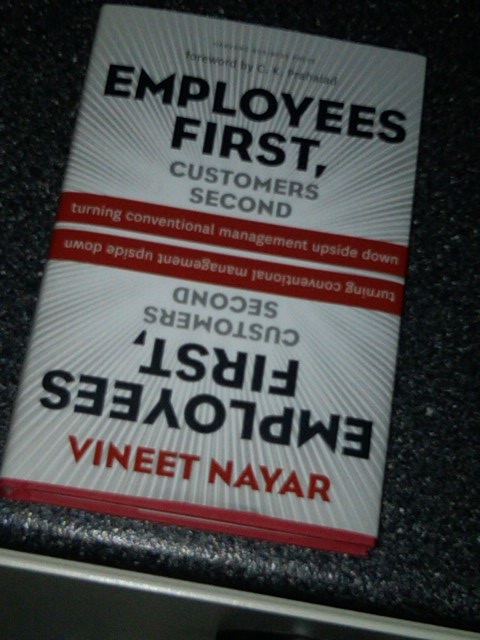
Shortly after this process concluded, I came across a new book that is right on the money.  As the photo above beautifully illustrates, the book is called Employees First Customers Second (EFCS for short).  In it, author Vineet Nayar, CEO of HCL Technologies, one of India’s largest professional services firms, describes the program he implemented at HCL (‘acronymed’ EFCS) and how it transformed the organization in a way that strengthened its foundation for growth.  He refers to the value zone… where employees meet and interact with customers to create value… as being the most important ‘zone’ for a company.  And he uses this as the basis for needing an Employees First mindset because value is created by them, in the trenches, on the front lines, at customer sites… not by executives and managers sitting, often times, far far away.  The best way to create value for your customers is to enable your employees.  It all rings true… at least from my experience.

I’m only halfway through but I have to admit I felt some level of vindication when I first came across this book.  It was nice to know that my thinking about “employees first” was shared (and with a global CEO and author at that).  And since I’m an organizational change guy, EFCS is already giving me all kinds of great ideas… especially for creating a culture of change – something all organizations are absolutely starving for.

Employees First Customers Second… Is it revolutionary?  I’m not sure.  Could it create a revolution in the way managers think?  Yep, it sure could… and I hope it does.

A means to an end…

I read an interesting post a little while ago… Change Management – a means to an end.” The author was making the point that organizational change practitioners should stop trying to convince their clients that ‘change management’ is necessary because change management is a means to an end… results!

I couldn’t agree more.

Management consultants have the opportunity to play a very effective role as trusted advisor to their clients.  However, a lot of clients are just looking for someone to implement what they’ve already decided.  And too often, the consultants comply (I encourage you to read my July 2009 post “We don’t hire consultants for advice“).  Consultants should resist blindly saying “yes” to a client’s order and focus on ensuring that value is created through whatever project or engagement is in play.  I don’t know about you but I’m not interested in being an order-taker.  There’s one of those on every street corner.  And if you follow the order and fail… guess what? You still failed.  And let’s not kid ourselves… the client didn’t fail, you did.

We should initiate all our early client discussions with their aspirations and goals as the context and push for a deep understanding of the benefits (results) they’re seeking.  Everything should flow from that… strategies, tactics, actions, deliverables, tasks…

Unfortunately, I think we’re often speaking a different language when we talk about change management methodologies… it’s academia, theory.  If we aren’t doing that, well, we’re probably viewed that way.  And I think it’s a more acute problem for organizational change practitioners.  We’re viewed as soft HR types.  In many cases, that’s probably a fair characterization.  But in many others, it’s not.  I describe myself as an accidental change practitioner.  I have a decidedly analytical bent to me (because of my early training as a strategy and process consultant).  But I also have a deeply rooted HR side to me; a real belief in the need to inspire people, to create an environment in which they’re motivated to do great things (even when that involves big change).  It’s these complementary perspectives that (I think) make me an effective consultant because I am always searching to fuse analysis with inspiration… analytics with messages… reality with vision.

Too often, our clients don’t really understand what ‘change management’ is… even though you’ll get about 200,000,000 search results for it on Google.  And at the end of the day, it doesn’t matter what ‘change management’ is.  It’s not important.  What is important is that you help your clients find the right path to success.  And although we may know that the path to success must be paved by “people”, success will only be marked by the achievement of results… the realization of benefits.  As an entrepreneurial finance prof used to say “It’s in the numbers!” (actually he said “numbahs” but that’s a story for another day).  And that, my friends and colleagues, is the only thing that should matter… for you and your clients.

Who comes first – employees or clients?

So… clients or employees?  Which comes first?  This has been a source of some debate in my company for a little while and it has gotten me thinking… is one more important than the other?  Should one come ahead of the other?  Is this just another version of the age old chicken and egg story?  Maybe.  Maybe not.

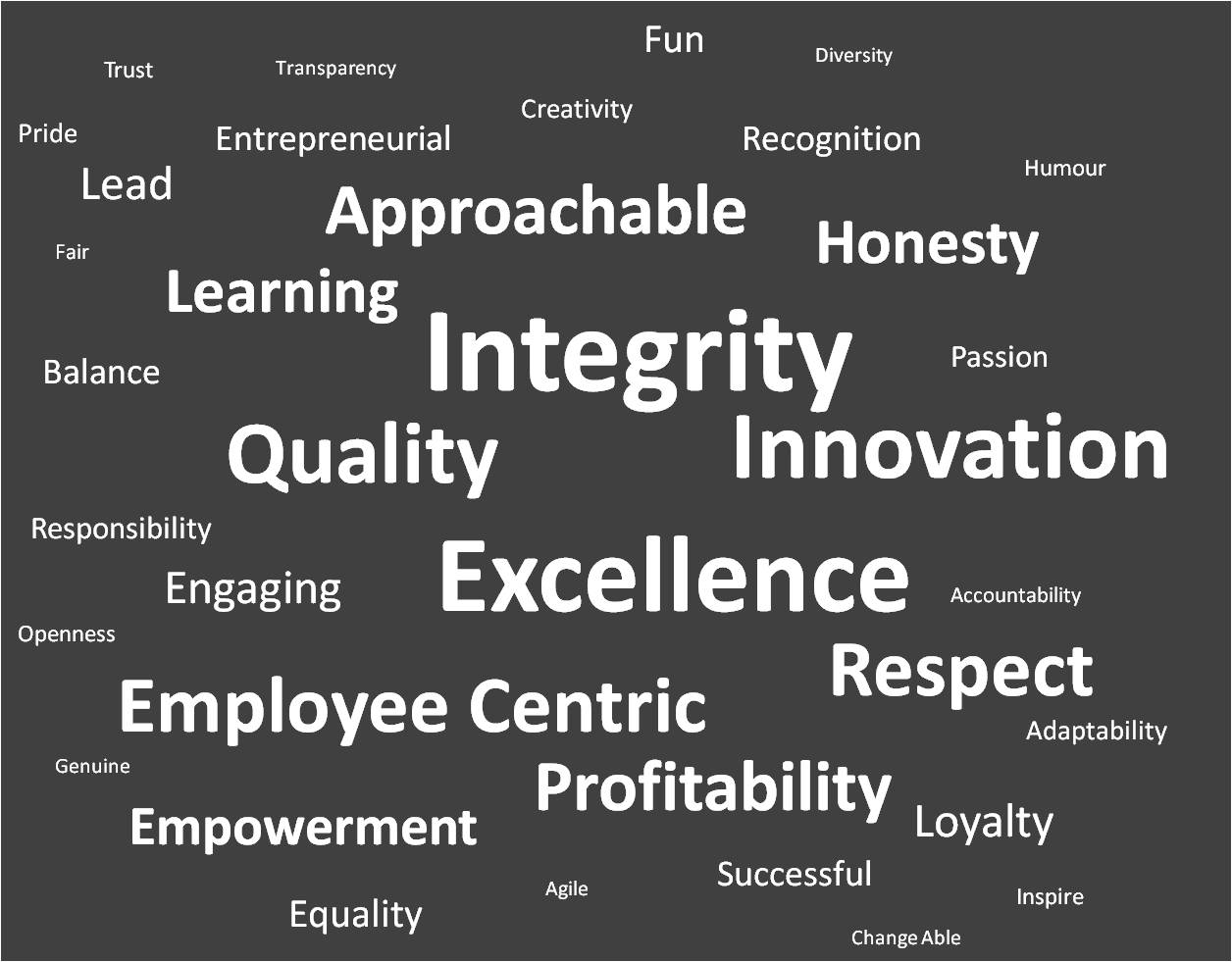
Let me first give you some context for the discussion we’re having around this.  We’re a young company and we’ve just concluded an exercise to define our core values and guiding principles. [I will write a post on this one soon].  We took a very inclusive and consultative approach to defining them… starting with a small group of senior types brainstorming values that mean something to us (it was basically a list of ‘words’ we like)… Integrity, Excellence, Innovative, Creativity, Trust, … you can probably guess many of the others.  Like I said… words we like!  Who doesn’t like those?

One of the ‘values’ raised wasn’t very well-defined but had, largely, to do with the importance of our company ‘being good’ to employees.  The value we landed on was employee-centric.  On its own, it doesn’t have much meaning but the point was to articulate that it was important that the company be ’employee centric’ by caring about employees and the things they care about — an inspiring working atmosphere, learning and professional development, as well as their personal goals, ‘hierarchy’ of needs, wellness, well-being, and so on.  As a group, we were ok with something as nebulous as ’employee-centric’ because we knew what it was supposed to mean and believed it was important.  We thought it was self-evident although not well-defined.

The next step was to take these ‘words’ (I had a tough time calling them values at that point) to the proverbial street – that is, to the staff across the company.  Each person had the opportunity to provide input by essentially voting for the words (values) they liked best (and even adding new ones if they felt something was missing).  And the result was the following:

We felt pretty good about our new ‘value cloud’.  The larger the word, the more votes it had received.

I know I know… so where’s the debate?  It’s coming up… now.

The next step was to take the value cloud and some draft wording around guiding principles to the partners for discussion, approval, rejection, or modification.  A discussion ensued which probably shouldn’t surprise anyone…

“Why do we not aspire to be as client centric as we are employee centric?”

Great question.  But the only answer myself and a couple others could muster was [something like this]… “Without employees who are engaged, enthusiastic, passionate, creative, entrepreneurial, innovative, and incredibly talented, we do not have a company.  If we take care of our people, they will take care of our clients.”  Therefore, employees come first.  [Sounds good, right?]

There was some hesitation on the other side of the table… a little discomfort with where this was going.  And the conversation started to go the other way… “Without clients who are buying our services and thus creating the revenues that allow us to operate, there is no company.”  Same logic, used from the other side.

Hmmm… stalemate?  This conversation went on for a few weeks…

What do you think?  Is it possible to say one is more important than another?  Is it just chicken vs. egg and, therefore, subject to opinion?  Or is one a more foundational aspect of a company and its success than the other?  Please weigh in.

Are we addicted to “different”?

Right now, there is a never-ending supply of organizations that are trying to reinvent themselves. Right now.  Everywhere I go, I hear people talking about the changes they want to make.  My clients talk about the transformation they’re embarking on.  My colleagues talk about the adjustments we need to make to… “get to the next level.”  Everything I read is about the dynamic world we live in and how those organizations who can innovate fastest, smartest, and for the least cost, will “win” in the next decade (I’m not sure how different that concept is today than, say, 50 or 100 years ago).

And this addiction began long before the recent financial meltdown.  It has been going on for at least as long as my career.  In earnest, it probably began in the early 90s with the advent of IT as an enabler of our businesses.

I do not use the word addiction lightly though… I believe we are addicted to change.  I think we are obsessed with tossing out the other guy’s model in favor of implementing our own… with very little regard to the fundamentals of good decision-making and sound investment.  And that’s a huge problem… for your employees, your customers, your partners, the communities you serve and support, and your shareholders.

Why is that a huge problem?  Because most of us suck at implementing change.  Yeah, I said it.  We, collectively, are horrible at it.  Don’t believe me?  Look around… How many articles are out there talking about the percentage of projects that fail?  It’s in the order of 2/3 to 3/4.  That is a staggering number.  And it should worry all of us… as shareholders, customers, employees, … even as taxpayers.

Don’t believe the hype?  It’s all propaganda right?  I don’t think so but fine.  Take a look around your own company.  How many changes have been attempted and either shelved, completely failed, or simply ended up like so many – in an ocean of mediocrity?  That’s all the evidence you should need to care.

The fact is… we’re addicted to ‘different.’  We don’t always know what we want or where we want to be… but we know it’s somewhere or something else.  And our addiction leads us down dark paths that often don’t end well (or don’t end at all).  So let’s do ourselves, our colleagues, our customers and our investors a favor.  If being ‘something’ or ‘somewhere’ else is important, then make it happen.  But make sure it sticks.  Because change that sticks creates value.  And change that doesn’t stick… well… I think you already know the answer.